

Hospice at home means your loved one stays in their own bed while a hospice team comes to them. A nurse visits on a regular schedule, an aide helps with bathing, a social worker and a chaplain are there if you want them, and someone can be reached by phone at any hour. The hospice brings the medical equipment and the medicines for comfort.
What home hospice does not look like is a nurse in the house around the clock. Most hands-on care between visits is done by family caregivers, with the team teaching, guiding, and stepping in when things change. If you are still deciding whether hospice is right, start with our piece on coming to terms with hospice care. This guide is about the practical side.
Who qualifies for hospice care at home
Hospice eligibility under Medicare comes down to a prognosis of six months or less if the illness runs its expected course, certified by the person’s doctor and the hospice medical director. The person also chooses comfort care instead of curative treatment for that illness. Medicare Part A pays for it, and Medicaid and most private plans follow similar rules.
Hospice is a form of palliative care, but the two are not the same. Palliative care focuses on symptom control and can start at any stage of a serious illness, alongside curative treatment. Hospice and palliative care share the focus on comfort, but hospice is for the final stages, when aggressive treatments have stopped helping or feel like too much. Can you get home health and hospice at the same time? Not for the terminal illness: once you receive hospice care, the hospice covers that care.
The first days: assessment, care plan, and equipment
Things usually move quickly once you say yes. A hospice nurse, usually a registered nurse, comes for an admission visit. They look at pain, symptoms, medicines, and how the person is eating and moving. They also look at the home: which room works best, whether a hospital bed will fit, how far it is to the bathroom.
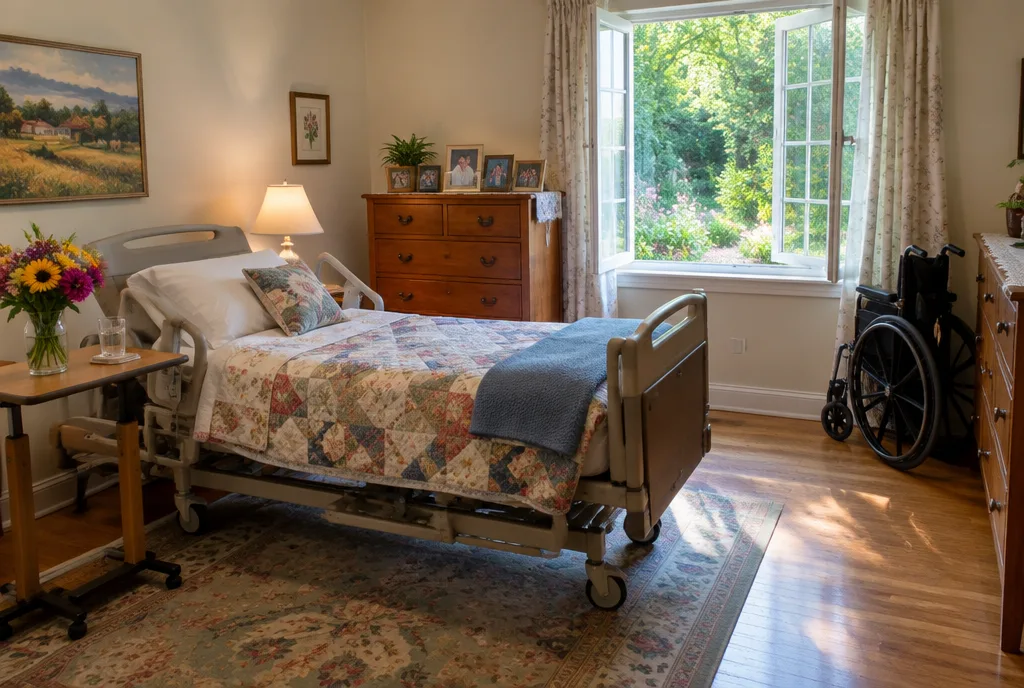
Together you build a care plan. It covers what matters most to your loved one, which symptoms to watch, how often each person visits, and who in the family makes day-to-day decisions. Within a day or two the hospice delivers equipment and supplies such as a hospital bed, a wheelchair or walker, a bedside commode, oxygen if needed, incontinence supplies, and a small “comfort kit” of medicines for sudden pain, anxiety, or shortness of breath.
A typical week: who visits and how often
Every hospice sets its own schedule based on individual needs, but a common week looks something like this:
- Nurse: one to three visits a week at first, more as needs grow, for symptom management and teaching you what to do.
- Aide: two to five visits a week for bathing, personal hygiene, fresh linens, and skin care. Many are certified nursing assistants.
- Social workers: early on and then as needed, for paperwork, advance directives, community resources, and difficult conversations in the family.
- Chaplain: spiritual care if you want it, whatever your faith or none.
- Volunteers: some hospices send someone to sit with your loved one so you can rest or run errands.
- Hospice doctor: oversees the plan, usually working with your own doctor.
Each visit is often under an hour. That is why the rest of the week matters so much.
Is hospice at home 24/7?
Support is available 24/7, but hands-on care is not. Every hospice has a nurse on call day and night. If pain spikes at 2 a.m. or breathing changes, you call the hospice line, not 911, and a nurse talks you through it or comes out.
Medicare’s hospice benefit has four levels of care. Routine home care is the usual level, with scheduled visits. Continuous home care means nurses or aides stay in the home for long stretches during a short crisis, such as pain that won’t settle. General inpatient care moves the person to a hospice unit or hospital for a few days when symptoms can’t be managed at home. Inpatient respite care gives the caregiver a break: your loved one stays in an approved facility for up to five days at a time, on an occasional basis. The details are on Medicare’s hospice care page.
What the family does and what the hospice team does
The hospice team plans care, manages symptoms, provides equipment and medicines, teaches you, and supports the patient and family together, including grief support for about a year afterward. The family, or hired help, covers the hours in between: giving medicines on schedule, offering sips and small meals, turning and repositioning, keeping the person clean, and simply being there.
Caregiving at this stage is tiring. If you cannot be there around the clock, say so early. The social worker can help you set up a rotation among relatives or add paid care services. Our guides on finding a home care provider and in-home respite care explain the options, and the guide for family caregivers covers looking after yourself as the main caregiver.
How long people usually stay on hospice at home
There is no set length. Some hospice patients are on hospice for a few days, others for many months. National figures from NHPCO, the national hospice organization, have shown a median stay of under three weeks, mostly because families start late. Starting earlier gives more remaining time to get symptoms under control, for the family to learn, and for the conversations that matter.
Hospice is paid in benefit periods: two 90-day periods, then an unlimited number of 60-day periods. At each recertification, the hospice doctor confirms the person still qualifies. If your loved one gets better, they can leave hospice and come back later. They can also stop at any time to return to curative treatment.
Signs that the end is near
Every death is different, and not every sign appears. There is no fixed order in which organs shut down, though digestion usually slows first, and later circulation and the kidneys. Common end-of-life changes in the last days and weeks include:
- Sleeping most of the day and becoming hard to wake
- Eating and drinking very little, then not at all
- Confusion, restlessness, or talking to people who aren’t there
- Changes in breathing, with long pauses or a rattling sound from saliva in the throat
- Cool hands and feet, and bluish or blotchy skin on the knees and feet
- Less urine, darker in color
These are part of the natural course of dying. The nurse can explain each one and help keep your loved one as comfortable as possible. The National Institute on Aging has a clear page on end-of-life care and comfort. When death comes, call the hospice. The nurse comes, confirms the death, and helps with the next steps.
What hospice does not always tell you
Families often wish someone had said a few things plainly. Hospice at home is a lot of work for the family. Room and board is not covered if your loved one lives in a nursing home or assisted living. Visits are short, and a busy agency may send different aides. And you can switch to another provider of hospice services once per benefit period if the care isn’t right.
Questions to ask before you start
Use these when you talk to hospice providers. Our guide to interviewing home care or hospice providers has more.
- How often will the nurse and the aide visit at first, and who decides when that changes?
- When I call at night, who answers, and how fast can a nurse come?
- Do you provide continuous home care in a crisis, and how often have you done it lately?
- Where do patients go for general inpatient care or respite, and is there a hospice facility nearby?
- What equipment do you bring, and how quickly?
- Which medicines are covered, and will anything cost us money?
- Will we have the same nurse and aide most of the time?
- Do you offer volunteers, and what grief support does the family get afterward?